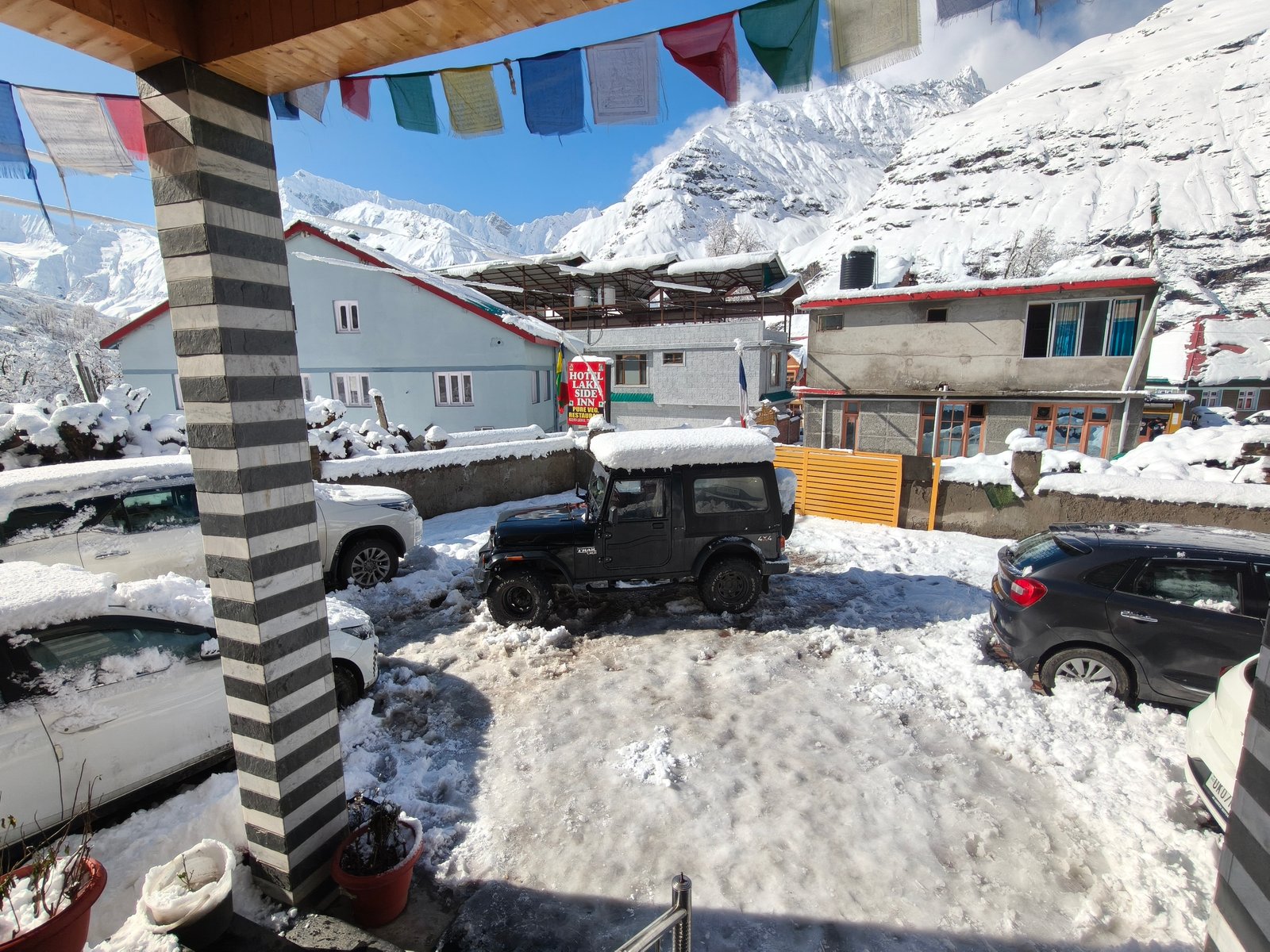
Trekking near Sissu ranges from gentle valley-floor walks to the lake and waterfall — easy and suitable for most visitors — up to bigger day hikes and high routes that need a local guide, acclimatisation to the ~3,100 m altitude, and the right season, since the higher trails are snowbound in winter. Think of Sissu as a calm walking base rather than a hardcore trekking hub: you can fill several days with beautiful, low-effort walks, and step up to something more demanding only when you are ready and properly guided.
Trekking around Sissu (what to expect at ~3,100 m)
First, an honest expectation-setter. Sissu is not a trekking town in the way Manali’s upper valleys or Spiti’s big passes are. It is a quiet village on the Lahaul valley floor at about 3,100 m, and its real charm is how much good walking sits right on the doorstep without any hardship at all. Most visitors come here to breathe, wander by the lake and waterfall, and soak up the mountains — not to grind up a pass.
That said, the terrain around the valley opens up into genuine hikes if you want them — short climbs to viewpoints, longer valley-floor traverses, and, for the fit and well-prepared, bigger day routes onto the higher slopes. The key thing to hold in mind is altitude. At 3,100 m the air is already thin, and any climb from here gains height fast. What would be an easy hour’s walk at sea level asks more of your lungs here, so pace yourself, especially on day one. For the walks and sights that anchor most trips, our things to do in Sissu guide is the natural companion to this page.
We have grouped the options below by effort — easy valley walks anyone can do, half-day viewpoint hikes for the reasonably fit, and bigger trails that genuinely need a guide, acclimatisation and the right season. Match the walk to your fitness and your day, not the other way round.
Easy valley walks (fine for most)
This is where most people should start, and for many it is the whole trip — and that is no bad thing. These are level or near-level walks on the valley floor, safe to do on your own, with the big scenery essentially handed to you.
- Sissu Lake loop. The calm, reflective lake is a 2-minute walk from the hotel, and an easy stroll around and along its shore is the gentlest “trek” here — flat, short and lovely at dawn. See our Sissu Lake guide for the best times to walk it.
- To the waterfall base. The tall ribbon of glacier-melt across the valley draws the eye from everywhere in Sissu. A gentle walk brings you toward its base for the closer view and the sound of it; our Sissu Waterfall guide covers the approach and when it runs fullest.
- Valley-floor wanders. Beyond the headline sights, the flat paths through fields, past the river and among the poplars make for unhurried, hour-or-two walks with mountains on every side — ideal for families, older travellers and anyone taking it easy on arrival day.
None of these needs a guide, special kit or real fitness — just decent shoes and a warm layer. They are also the smart way to spend your first day while your body adjusts to the height before you attempt anything steeper.
Half-day hikes to viewpoints
When you have found your legs and settled into the altitude — usually the second day — you can step things up to a half-day hike. These trade the flat valley floor for a bit of climb, and reward you with wider views back over Sissu, the river and the snow-streaked Pir Panjal opposite.
The pattern is a steady uphill on rough ground to a viewpoint or a higher meadow, then back the way you came, with the whole outing taking a morning or an afternoon rather than a full day. They are well within reach of a reasonably fit walker, but they are not paved: expect loose stone, the odd stream crossing and sections that get slippery after rain, so proper grippy footwear matters. Carry water, a windproof layer and sun protection, because the weather up on the slopes turns faster than it does on the valley floor.
If you are not sure which viewpoint suits your fitness and the day’s conditions, just ask us at reception — we can point you to a walk that fits, and tell you honestly if the ground is still wet or snow-patched higher up.
Bigger day trails & high routes (guide + acclimatisation + season)
Beyond the half-day viewpoints lie the genuinely demanding routes — longer day trails and high-altitude paths that climb well above the valley onto exposed, remote ground. These can be superb, but we are deliberately careful here, and we will not hand you false-precise numbers we cannot stand behind. What matters is the honest picture: these are serious high-altitude hikes, not casual afternoon walks.
For anything beyond the easy valley floor and the half-day viewpoints, we strongly advise going with a local guide. The reasons are practical, not bureaucratic:
- Route-finding. Paths are faint, unsigned and easy to lose, and a wrong turn on a high slope is a real problem.
- Altitude judgement. A guide knows how high is sensible for your group and when to turn back — the single most important skill up here.
- Weather & ground. Conditions change quickly; snow lingers in shaded gullies long into the season, and a local reads the day far better than a visitor can.
- Safety margin. Phone signal is patchy and help is distant, so going alone on a big route is a risk not worth taking.
These high routes are also strictly seasonal: through the deep cold they are snowbound and effectively closed, and even in the shoulder months the higher ground can hold snow and ice. If you have the energy but want the thrill without a full expedition, Sissu’s organised adventure activities are a safer, more predictable way to spend it. We are always happy to connect guests with reliable local guides — just get in touch and tell us what you are after.
Altitude, safety & weather
The one factor that ties every walk here together is altitude. Sissu sits at roughly 3,100 m, high enough that some visitors feel mild altitude effects — headache, breathlessness, poor sleep — in the first day or two, and any climbing from here only adds to that. The golden rules are simple: arrive, rest, and keep day one gentle; hydrate well; and do not attempt a big hike until you have acclimatised. If you feel unwell as you climb, come down — height is not a thing to push through. Our Sissu altitude & AMS guide explains the warning signs and how to stay safe in full.
A few more safety habits worth keeping:
- Start early, finish early. Mountain weather often builds through the afternoon, and the light fades fast — be back before dusk.
- Tell someone your plan. Let us at reception know your route and rough return time before you set off on anything bigger than a valley walk.
- Respect the water. Streams and the river run fast and icy with glacier melt; do not wade or cross where it is strong.
- Turn back without ego. Bad weather, tiredness or fading light are all good reasons to stop — the mountain will be there next time.
Handled sensibly, walking around Sissu is safe and rewarding. The trouble almost always comes from doing too much too soon at altitude, or pressing on when the sky or the clock says otherwise.
Best season & what to pack
Timing shapes everything you can walk here. Broadly, June to September is the window for the fuller range of hikes — the valley floor is green and dry underfoot, the half-day trails are clear, and the higher routes gradually open as the snow retreats. The easy valley walks by the lake and waterfall are doable across the open season, while the high routes stay snowbound and closed through winter and only firm up well into the warmer months. For the month-by-month picture, see our best time to visit Sissu guide and plan your hiking days around it.
Whatever you attempt, pack for a mountain at 3,100 m where the weather turns quickly:
- Grippy footwear — proper walking shoes or light boots; the ground is rough, stony and often wet.
- Layers — a warm mid-layer and a windproof or light waterproof shell, since it is cooler and breezier on the slopes than in the village.
- Sun protection — the high-altitude sun is fierce even when the air is cool; take sunscreen, sunglasses and a cap.
- Water and a snack — there is nothing to buy once you leave the village.
- A small first-aid kit and any personal or altitude medication.
For a full season-by-season checklist, our what to pack for Sissu guide has you covered. Sort the footwear and the layers, respect the altitude, and Sissu gives you some of the most relaxed and scenic walking in Lahaul — from a two-minute stroll to the lake right up to a proper guided day on the heights.
Frequently Asked Questions
Is Sissu good for trekking?
Sissu is best thought of as a gentle walking base rather than a hardcore trekking hub. It excels at easy valley-floor walks to the lake and waterfall that suit almost everyone, and it does have bigger day hikes and high routes nearby — but those need a local guide, acclimatisation to the ~3,100 m altitude and the right season. Come for relaxed scenic walking, and step up to a real trek only when you are ready.
What easy walks can I do in Sissu without a guide?
The Sissu Lake loop and the walk toward the waterfall base are both a short, flat stroll from the hotel and fine to do on your own, as are the gentle valley-floor paths through fields and along the river. These need only decent shoes and a warm layer — no guide, no special kit and no real climbing.
Do I need a guide for treks near Sissu?
Not for the easy valley walks and lake or waterfall strolls. But for the bigger day trails and high routes above the valley, yes — go with a local guide. Paths are faint and unsigned, the altitude needs careful judgement, snow lingers in shaded ground, and phone signal is patchy, so going alone on a high route is a real risk. We can connect guests with reliable local guides.
When is the best season for hiking near Sissu?
Roughly June to September for the fuller range of hikes, when the valley is dry underfoot and the higher trails gradually open as the snow retreats. The easy lake and waterfall walks are doable across the open season, but the high routes stay snowbound and effectively closed through winter.
Will I get altitude sickness hiking around Sissu?
Sissu sits at about 3,100 m, so some visitors feel mild altitude effects — headache, breathlessness or poor sleep — in the first day or two, and climbing adds to it. Keep day one gentle, hydrate, and do not attempt a big hike until you have acclimatised. If you feel unwell as you climb, come down. Our Sissu altitude & AMS guide covers the warning signs in full.
What should I wear for walks and hikes in Sissu?
Grippy walking shoes or light boots are essential — the ground is rough, stony and often wet. Add warm layers and a windproof or light waterproof shell, since the slopes are cooler and breezier than the village, plus sun protection for the fierce high-altitude sun. Carry water and a snack, as there is nothing to buy once you leave the village.
A calm base for your Sissu walks
Rest, acclimatise and set off from the door — mountain-view rooms a 2-minute walk from Sissu Lake, with 24×7 hot water, heaters & a pure-veg kitchen. Book direct for our best rate.