Pack warm layers you can build up — a heavy jacket and thermals in winter, a single warm jacket for evenings in summer — plus strong sun protection for the high-altitude UV, cash (ATMs are scarce), and a small kit of basic medicines. At 3,100 m the nights are cold all year, so plan for layers, not bulk.
Quick answer
Sissu sits at roughly 3,100 m in the Lahaul valley, and the single most important thing to understand is that nights are cold here all year — even in summer. So the rule is the same in every season: pack layers you can add or remove rather than one heavy item.
In winter (December–March) you need serious cold-weather gear: a heavy insulated jacket, thermals, fleece, woollens and waterproof snow boots. In summer (May–September) the days are mild but you still want light layers plus one warm jacket for the chilly evenings, and a light raincoat for the monsoon. On top of that, every visitor should carry strong sun protection, cash, a power bank and a few basic medicines. The detailed checklists below make it easy to tick off before you leave.
Winter packing list (Dec–Mar)
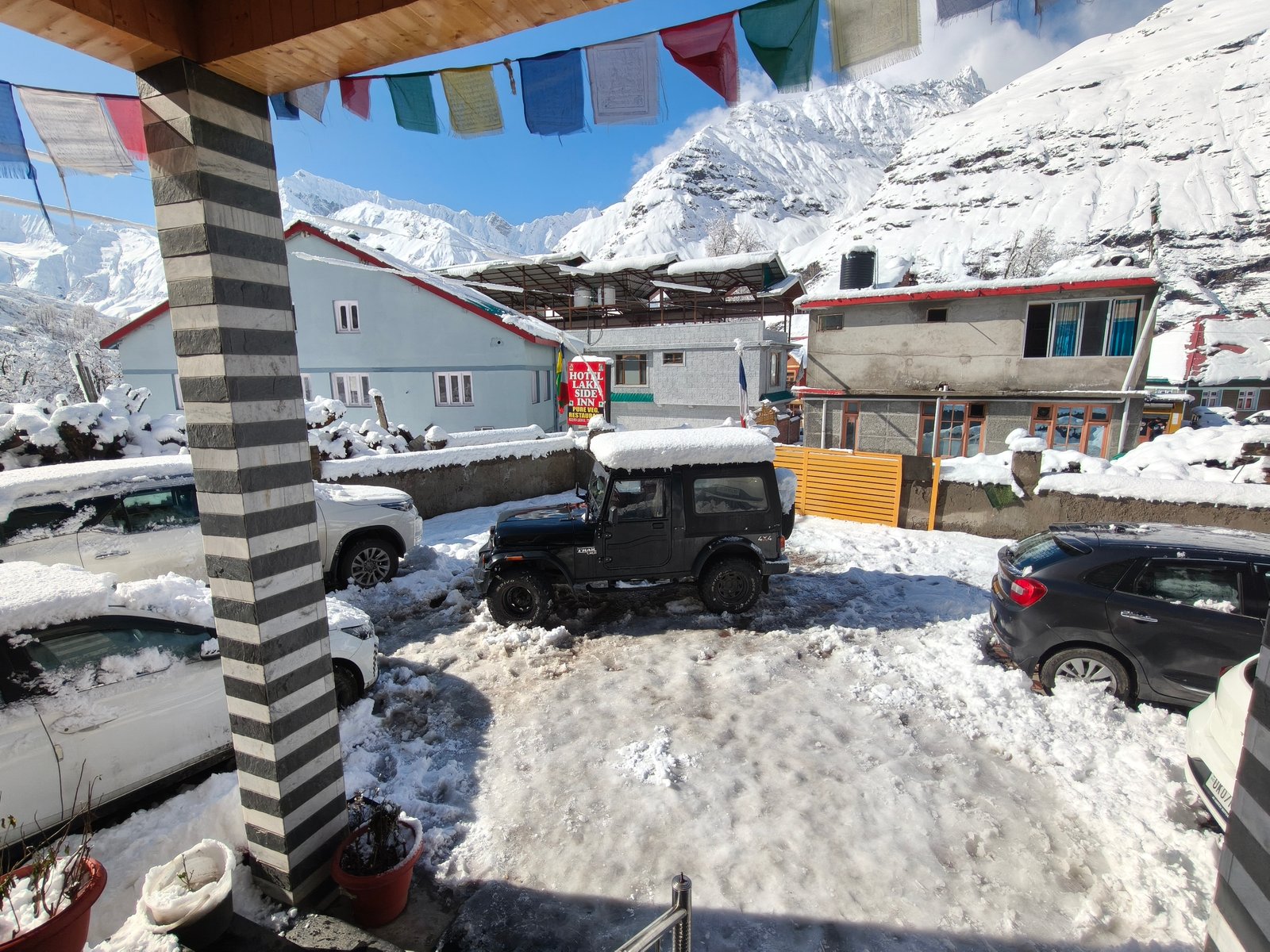
Winter in Sissu means snow, sub-zero nights and biting wind. Dress in layers so you can adjust between a warm room and the freezing outdoors. Here is what to pack:
- Heavy down or insulated jacket — your single warmest layer; windproof is a big plus.
- Thermal base layers (top + bottom) — wear under everything; pack at least two sets.
- Fleece or wool sweater layers — one or two mid-layers to trap heat between thermals and your jacket.
- Woollen cap / beanie — most body heat is lost from the head.
- Insulated gloves — ideally waterproof; touchscreen-friendly is handy for photos.
- Scarf or neck gaiter — protects your face and neck from wind.
- Warm, waterproof snow boots — with good grip for snow and ice; break them in before the trip.
- Extra warm socks — wool or thermal; carry several pairs, as feet get wet in snow.
- Moisturizer & lip balm — the cold, dry air cracks skin and lips quickly.
- Warm sleepwear — nights are very cold; thermals double as sleepwear.
Summer packing list (May–Sep)
Summer days in Sissu are pleasant and good for walking, but the evenings still turn cold and the monsoon can bring rain. Pack light, but never leave the warm layer behind:
- Light layers — full-sleeve t-shirts, a couple of light tops you can layer up.
- One warm jacket or fleece — essential for the chilly evenings and nights.
- Comfortable walking shoes — closed, with grip, for the lake, waterfall and short trails.
- Light raincoat or compact umbrella — the monsoon (roughly July–August) can bring sudden showers.
- A pair of warm socks and a light cap — for cold mornings and evenings.
- Quick-dry trousers — more practical than jeans if it rains.
All-season essentials
These go in your bag no matter when you visit. The high altitude and remote location make a few of them genuinely important rather than optional:
- Strong sunscreen (high SPF) — UV is intense at altitude even on cold or cloudy days; reapply through the day.
- UV sunglasses — snow and high-altitude sun cause real glare; protect your eyes.
- Refillable water bottle — staying hydrated also helps you cope with the altitude.
- Power bank — charging points are limited on the road and during travel, so keep your phone and camera topped up.
- Cash — carry enough; ATMs are few and not always working, and many small vendors are cash-only.
- Basic medicines — paracetamol, an anti-nausea tablet, ORS (rehydration salts) and any personal/prescription medicines.
- Small first-aid kit — band-aids, antiseptic, blister plasters.
- Government photo ID — carry a valid ID for the journey and check-in.
- Offline maps — download them in advance, since mobile networks are patchy in the valley.
- Reusable bag for waste — carry your trash back; the valley is fragile.
Health, altitude & medicines
At around 3,100 m, Sissu is high enough that some visitors — especially those coming up quickly from the plains — can feel mild altitude effects: headache, slight breathlessness, tiredness or trouble sleeping the first night. This is usually mild and settles as you acclimatise. A few sensible steps help:
- Go up steadily and rest on arrival. Avoid heavy exertion on your first day.
- Stay hydrated and go easy on alcohol, which makes altitude effects worse.
- Carry basic medicines: paracetamol for headache, an anti-nausea tablet, and ORS for dehydration.
- Bring all personal/prescription medication — pharmacies are limited and the nearest town is some distance away.
- If you are altitude-sensitive, ask your doctor about Diamox (acetazolamide) before the trip. It is a prescription medicine for altitude — only take it on a doctor’s advice, never on your own.
If anyone develops a severe, persistent headache, repeated vomiting, confusion or significant breathlessness, treat it seriously, descend toward Manali, and seek medical help — these can be signs of more serious altitude sickness.
What you DON'T need to carry
It is just as useful to know what to leave at home. Over-packing makes the mountain journey harder, so skip these:
- Heavy formal wear or fancy clothes — Sissu is casual; you will live in warm, practical layers.
- Too many bulky items — choose layers over one giant coat; layers pack smaller and adapt better.
- Hair dryers and bulky appliances — power can be limited; pack light electronics only.
- Large amounts of jewellery or valuables — there is no need for them here.
- Single-use plastics — bring a refillable bottle instead and help keep the valley clean.
For a season-by-season view of exactly what weather to plan for, see our best time to visit Sissu guide. Heading up in the snow? Our Sissu in December guide covers winter conditions in detail, and you can check the current open/closed status before you set off. When you are ready to stay, browse our rooms.
Frequently Asked Questions
What clothes should I pack for Sissu in winter?
For winter (December–March) pack a heavy down or insulated jacket, thermal base layers (top and bottom), fleece or wool sweaters, a woollen cap, gloves and scarf, plus waterproof snow boots with extra warm socks. Dress in layers so you can adjust between warm rooms and the freezing outdoors, and bring moisturizer and lip balm for the dry cold.
Do I need snow boots for Sissu?
In winter, yes — you want warm, waterproof boots with good grip for snow and ice, plus several pairs of warm socks. In summer, sturdy closed walking shoes with grip are enough for the lake, waterfall and short trails; snow boots are not needed.
Are there ATMs in Sissu?
Sissu has very few ATMs, and they are not always working or stocked. The nearest reliable cash machines are at Keylong. Withdraw enough cash before you reach the valley, keep some spare, and don’t rely on cards — many small vendors are cash-only.
Do I need medicine for altitude in Sissu?
Sissu is at about 3,100 m, so some visitors feel mild altitude effects. Carry basic medicines (paracetamol, anti-nausea tablets, ORS) and any personal prescriptions. If you are prone to altitude sickness, ask your doctor about Diamox before the trip — it is a prescription medicine and should only be taken on medical advice, not self-prescribed.
What sun protection do I need in Sissu?
The UV at high altitude is intense, even on cold or cloudy days, and snow reflects more glare. Pack strong high-SPF sunscreen (reapply through the day) and UV-protective sunglasses. Lip balm and moisturizer also help against the sun and dry mountain air.
Is there mobile network in Sissu?
Mobile coverage in Sissu and the Lahaul valley is patchy — signal can be weak or absent in places, and data is unreliable. Download offline maps before you arrive, tell family your plans in advance, and carry a power bank since charging points are limited while you travel.
Make Sissu your home for a few days
Cosy mountain-view rooms, 24×7 hot water and a pure-veg kitchen — a 2-minute walk from Sissu Lake. Book direct for our best rate.