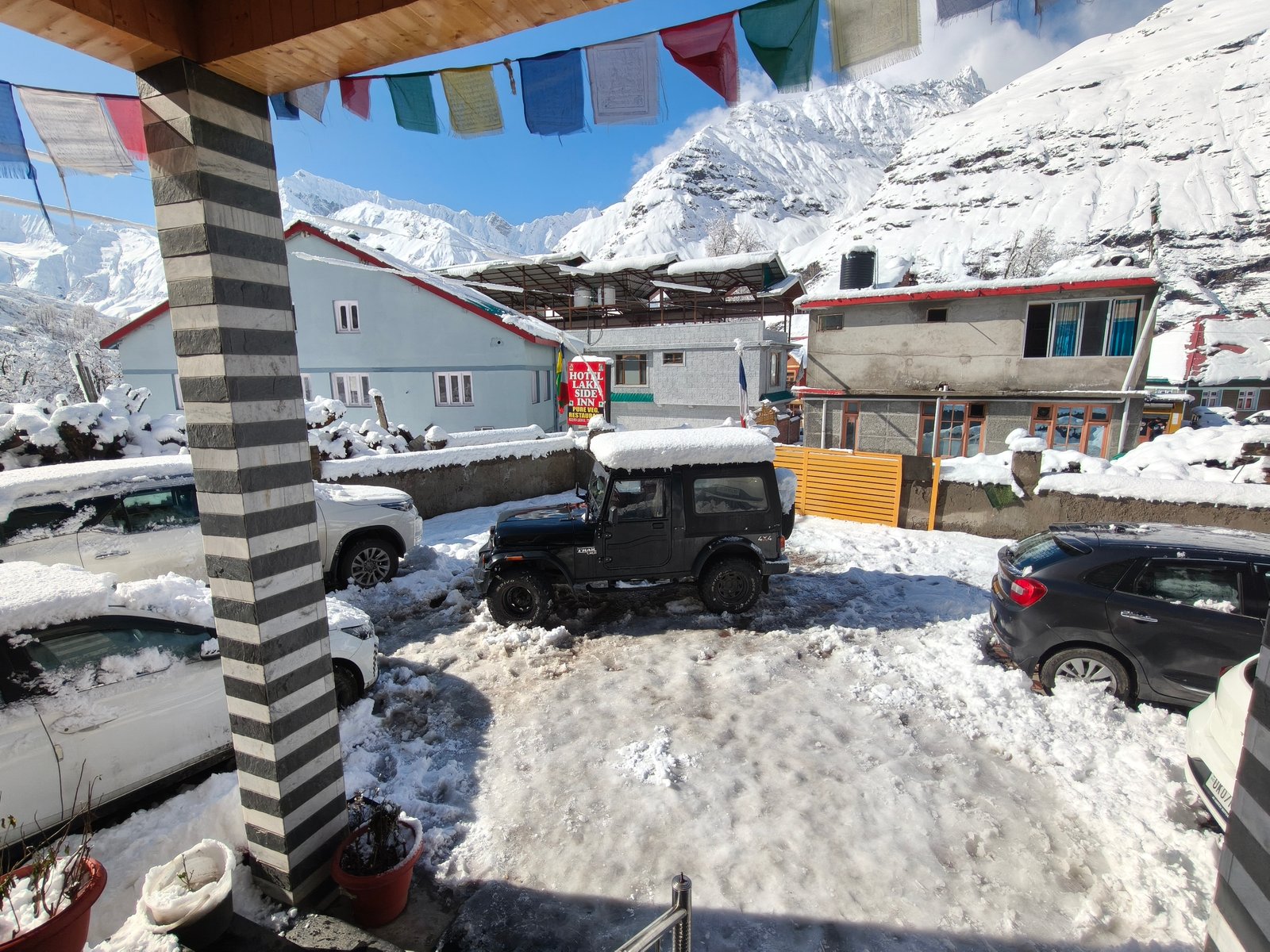
Sissu Waterfall, known locally as Palden Lhamo Dhar, is a tall cascade that drops down the mountain wall across the Chandra river from Sissu village in Lahaul. It is clearly visible from the valley floor, free to view, and one of Sissu's signature sights — and Hotel Lake Side Inn is just a 2-minute walk away.
About Sissu Waterfall (Palden Lhamo Dhar)
Sissu Waterfall is a tall, ribbon-like cascade that pours down the steep mountain wall on the far side of the Chandra river, directly opposite Sissu village in the Lahaul region of Himachal Pradesh. Unlike many Himalayan falls that are tucked away behind a long trek, this one is on full display from the valley floor — you can take it in from the main road as you drive into Sissu, from the grassy ground around Sissu Lake, and from the open viewpoints above the village. That easy, in-your-face visibility is a big part of why it has become one of the area's most photographed natural sights.
Fed by snow and glacier melt high on the ridge, the fall is a living, seasonal thing. It runs at its fullest and most powerful through the warm months, when the cascade thunders white against the dark rock and green slopes. In the depths of winter the flow drops and the water partly freezes, leaving a dramatic, stilled column of ice clinging to the cliff — a completely different but equally striking picture. For a wider sense of what the valley holds, see our guide to things to do in Sissu.
The legend behind the name
To locals the waterfall is Palden Lhamo Dhar. The name carries real meaning: Palden Lhamo is a revered protector goddess in Himalayan Buddhist tradition, long associated with mountains, weather and water, and dhar refers to a sustained flow or torrent. So the name reads, in effect, as the cascade of the goddess Palden Lhamo — a fitting title for a fall that seems to spill straight off the high peaks. A gompa in the small settlement above Sissu is dedicated to the same deity, which is why her name travels naturally to the waterfall below.
For visitors, the name is more than a label. It is a small reminder that in Lahaul these landscapes are woven into local belief, and that the fall you are photographing is, to the people who live here, a sacred presence rather than just a scenic backdrop.
Best time to visit
The waterfall is at its most dramatic from late May to early October. This is when warming days melt the snow and glacier ice on the slopes above, sending the most water over the edge — the cascade is loudest, widest and whitest in high summer. It also happens to be when the road over the Atal Tunnel is reliably open and the valley is green, so it is the easiest and most rewarding window for a trip overall. Plan around our detailed best time to visit Sissu guide.
Within the day, morning light is the photographer's friend here. The sun strikes the far valley wall early, lifting the white water against the rock and often catching a faint rainbow in the spray. By contrast, deep winter offers a rarer sight: with the flow much reduced, parts of the fall freeze into a hanging sheet of ice. It is beautiful, but it comes with snowbound roads and cold, so winter visits need careful planning.
Note: the rocks near the base can be slippery, and in winter the ice formation is fragile — admire it from a safe distance and do not climb on or under it. If you want to reach the base, ask locally first about the current path and river conditions, which change with the season.
How to reach the waterfall
Getting to Sissu is straightforward, and once you are there the waterfall is hard to miss:
- To Sissu — the village is roughly 40 km from Manali, reached by driving north through the Atal Tunnel; Sissu lies a short distance beyond the tunnel's north portal on the main Lahaul road. See our how to reach Sissu guide for timings and road notes.
- To view the fall — no trek is needed. It is visible from the main road, from the meadow around Sissu Lake, and from the higher viewpoints near the village. Simply stop, look across the Chandra river, and you will see the cascade on the far wall.
- To reach the base — a footbridge crosses the Chandra and a local path leads towards the falls for those who want to get closer. Conditions vary with the season and water level, so ask locally before setting out and allow time for an easy walk on uneven, sometimes wet ground.
Because the fall sits right above the village area, the easiest viewing spots are all within a short, flat stroll once you arrive in Sissu.
Where to stay nearby
The most relaxed way to enjoy the waterfall is to stay within sight of it and visit in the soft morning light rather than rushing a day trip from Manali. Hotel Lake Side Inn is a 2-minute walk from the waterfall viewpoints and the lake, so the falls and the surrounding snow peaks are right on your doorstep from the moment you wake.
What's included with a stay:
- Mountain-view rooms looking out over the Sissu valley, the falls and the snow peaks.
- Hot water — essential at this altitude, morning and night.
- Pure-veg restaurant serving fresh, home-style meals on site.
- Free parking for guests arriving by car or taxi.
Browse our rooms and rates to find the right fit, or contact us directly for dates and availability. Booking direct with us gets you the best rate and a host on hand for the best viewing times and local tips.
Frequently Asked Questions
Where is Sissu Waterfall?
Sissu Waterfall is in Lahaul, Himachal Pradesh, on the mountain wall across the Chandra river from Sissu village. It is clearly visible from the valley floor, the main road into Sissu and the area around Sissu Lake, roughly 40 km from Manali via the Atal Tunnel.
What is Palden Lhamo Dhar?
Palden Lhamo Dhar is the local name for Sissu Waterfall. It is named after Palden Lhamo, a protector goddess in Himalayan Buddhist tradition; dhar means a sustained flow or torrent, so the name refers to the cascade of the goddess Palden Lhamo.
What is the best time to see Sissu Waterfall?
Late May to early October, when snow and glacier melt make the fall fullest and most powerful. Morning light is best for photography, while deep winter shows a partly frozen ice formation.
Does Sissu Waterfall freeze in winter?
Partly, yes. In the coldest months the flow drops sharply and sections of the fall freeze into a dramatic hanging column of ice on the cliff. It is striking but fragile, so view it from a safe distance.
How do you reach Sissu Waterfall?
Reach Sissu village (about 40 km from Manali via the Atal Tunnel) and the fall is visible across the Chandra river with no trek required. To reach the base, a footbridge and local path lead towards the falls — ask locally about current conditions before setting out.
Which hotels are near Sissu Waterfall?
Hotel Lake Side Inn is one of the closest stays — about a 2-minute walk from the waterfall viewpoints — with mountain-view rooms, hot water, a pure-veg restaurant and free parking. See our rooms page for details.
Stay a 2-minute walk from Sissu Waterfall
Wake up to the falls and the snow peaks. Mountain-view rooms, hot water and pure-veg food at Hotel Lake Side Inn. Book direct for the best rate.