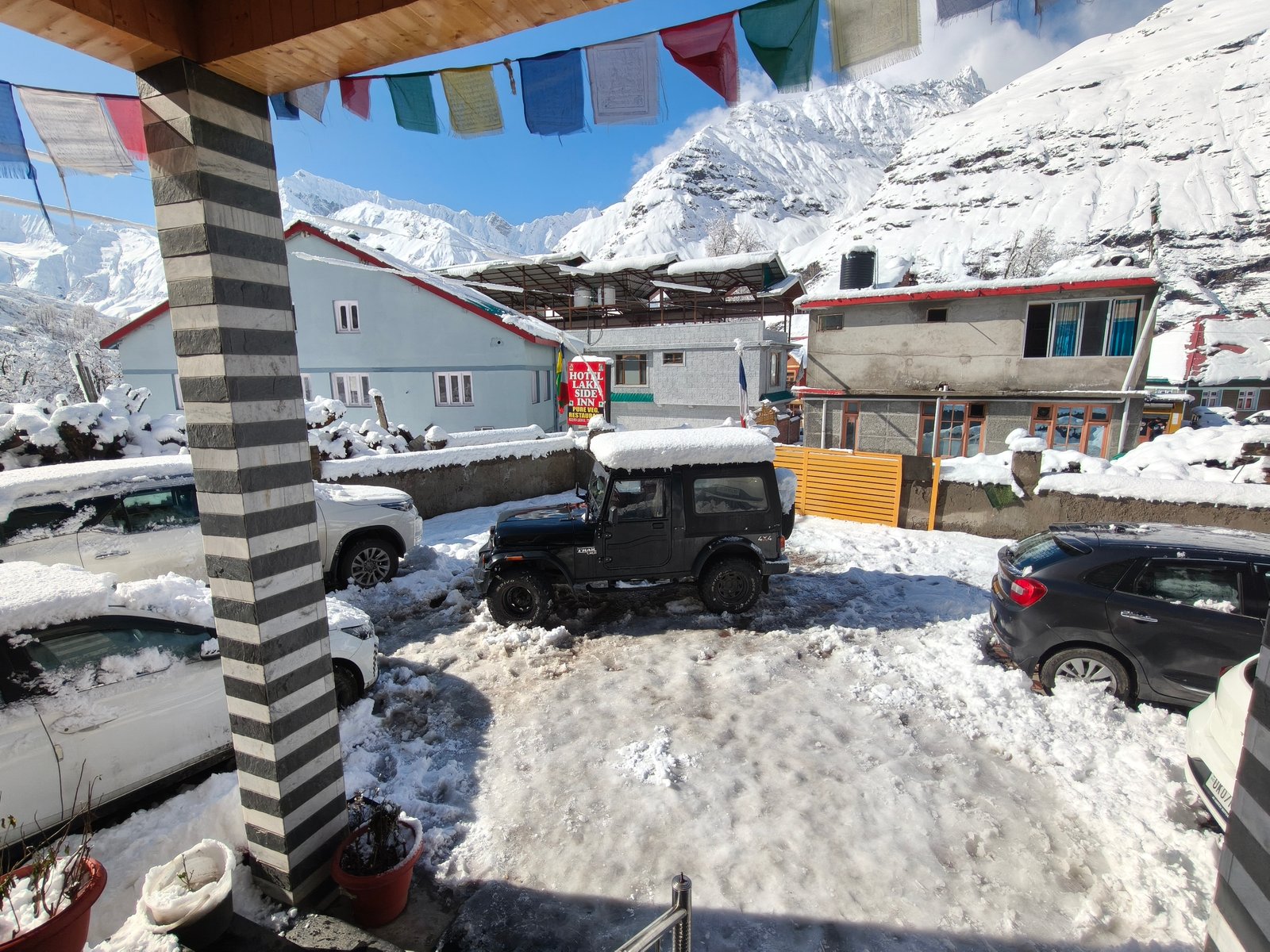
A relaxed 3-day Sissu itinerary uses the village as a calm base — day one to arrive and see the lake and waterfall, day two for a big day trip (Chandratal in summer, or Keylong and Jispa), and day three for the quiet valley before driving back to Manali. Three days is the sweet spot: enough to slow down, acclimatise and reach one of Lahaul’s showpiece spots, without the long haul of a full Spiti loop. Below is exactly how we’d plan it for you.
Why 3 days in Sissu works (base + day trips)
Most people rush Sissu in a day and miss what makes it special. Give it three, and the trip changes shape entirely. The idea is simple: keep one calm base and travel out from it rather than packing and repacking every morning. You unpack once, learn where the good tea is, and use Sissu as a launch pad for the wider Lahaul valley — then come home each evening to the same warm room.
Three days also respects the altitude. Sissu sits at about 3,100 m, and a gentle first day lets your body settle before a bigger, higher day trip on day two — especially if you are heading toward Chandratal at over 4,200 m. It is the difference between arriving frazzled and actually enjoying the mountains. If you are still deciding on trip length, our how many days in Sissu guide compares 1, 2 and 3-day plans side by side; this page is the full three-day version.
Day 1: Manali → tunnel → Sissu, lake & waterfall
Leave Manali in the morning, ideally by 8–9 am to beat the queue that builds at the tunnel’s south portal. The drive is short and spectacular: roughly 38–40 km and 1–1.5 hours through the Atal Tunnel, whose north portal drops you into the Lahaul valley about 12 km from Sissu. Fill your fuel tank before you leave — there is no petrol pump in Sissu, and the next one is at Tandi past Keylong. For the full route, rules and options, see how to reach Sissu.
Arrive, check in, and take the first afternoon slowly — this is your acclimatisation day, so resist the urge to over-schedule. The two headline sights sit right on your doorstep:
- Sissu Lake — a calm, reflective lake a 2-minute walk from the hotel, with the peaks mirrored on its surface. An easy, level stroll rather than a trek. Our Sissu Lake guide has the best times to visit.
- The Sissu Waterfall — a tall ribbon of glacier-melt tumbling down the far slope, also just minutes away and loudest through summer. See our Sissu Waterfall page for the viewpoint.
Wander the valley floor, watch the light change on the snow, and let the day wind down with a hot dinner. Because dining in the village is limited, having a kitchen where you stay makes the first evening far easier — and the golden hour here, once the day-trippers have driven back through the tunnel, is the quiet reward for staying over.
Day 2: A big day trip (Chandratal in summer, or Keylong & Jispa)
This is the centrepiece of the three days — and which trip you pick depends entirely on the season.
Option A: Chandratal (summer only)
If you are visiting between roughly June and early October, aim for Chandratal, the high-altitude “moon lake” reached via the Kunzum Pass. It is a long, full day out and the road is rough in patches, so start early and consider a local driver rather than self-driving if you are new to mountain roads. The payoff is one of the most beautiful lakes in the Himalaya. Crucially, the passes to Chandratal close in winter, so this option simply is not available outside the warm months — plan it with our Sissu to Chandratal guide.
Option B: Keylong & Jispa (year-round)
Outside the Chandratal window — or if you would rather keep the day gentler — head up the valley toward Keylong (about 30 km, the district headquarters of Lahaul) and on to Jispa (about 50 km), a quiet riverside hamlet on the road to Leh. This is a far more relaxed day than Chandratal: easy driving, wide valley views, monasteries and a proper sense of deep Lahaul without the altitude push. See Sissu to Keylong and Sissu to Jispa for distances and stops along the way.
Whichever you choose, carry water, snacks, warm layers and some cash — ATMs and card acceptance are thin on this side of the tunnel. Get back to Sissu by evening and enjoy a second calm night at base.
Day 3: Relaxed valley morning, nearby spots, drive back
Day three is deliberately light. With the big trip behind you, the morning is for the quiet corners of Sissu you skipped on arrival — a slow riverside walk, the Raja Gyephang views, or simply the lake at dawn when it is glassy and almost empty. Our things to do in Sissu guide lists the gentler options if you want a short, scenic wander before you leave.
Time your drive back with the light in mind. Aim to start for Manali by early-to-mid afternoon so you clear the Atal Tunnel and descend before dark and before any evening traffic or clearance holds. The return is the same easy 1–1.5 hours, and you roll back into Manali unhurried rather than racing the sunset. If your trip has room for a fourth stop, this is also the natural day to fold in a short detour to a nearby village or viewpoint on the way out.
Adjusting by season
The single biggest variable in this plan is day two, and it is entirely seasonal:
- Summer (roughly June–September): Everything is open. Choose Chandratal for the showpiece day trip, with the waterfall at full flow and long daylight to play with.
- Autumn (October): Skies are at their clearest, but the Chandratal window is closing — check locally, and keep Keylong and Jispa as the reliable fallback.
- Winter (roughly December–March): The high passes are shut, so Chandratal is off the table entirely. The three days shift toward snow, the frozen-edged lake, and shorter valley trips like Keylong, with the tunnel your reliable link to Manali. Note the valley can see a winter-tourism break in the deepest weeks — always check road and opening status before you book.
Whatever the month, the shape holds: a settling-in day, a big day out, and a soft landing before you leave. Only the day-two destination flexes. Our best time to visit Sissu guide breaks the seasons down month by month if you are still choosing dates.
Where to stay & practical tips
For a base-and-day-trips plan like this, where you stay matters more than usual, because you come back to it every evening. A spot on the valley floor, close to the lake and with its own kitchen, saves you the two things Sissu makes hard: warmth after dark and a hot meal when the village dining shuts early. Our where to stay in Sissu guide compares hotels, homestays and camps honestly.
A few practical notes for the three days:
- Fuel in Manali. No petrol in Sissu; carry a full tank, especially for the day-two trip.
- Carry cash. ATMs and card machines are unreliable across Lahaul — keep enough for fuel, food and the day trip.
- Layer up. Even in summer the nights bite at 3,100 m, and a Chandratal day is colder and higher again.
- Go easy on day one. Let the altitude settle before the big day out; hydrate and sleep well.
- Check conditions. In winter and monsoon the Manali-side approach can see short holds — a quick call before you set off saves guesswork.
Our mountain-view rooms sit a 2-minute walk from Sissu Lake, with room heaters, 24×7 hot water and a 100% pure-veg kitchen on site — a comfortable base for exactly this kind of three-day plan.
Frequently Asked Questions
Is 3 days enough for Sissu?
Yes — three days is the sweet spot. It gives you a gentle arrival day for the lake and waterfall, a full day for a big trip like Chandratal or Keylong and Jispa, and a relaxed final morning before the drive back. You see the headline sights and reach the wider Lahaul valley without the long haul of a full Spiti loop.
What is the best day trip from Sissu on a 3-day plan?
It depends on the season. In summer (roughly June to early October) Chandratal is the showpiece day trip. In winter, or if you prefer an easier day, head up the valley to Keylong (~30 km) and Jispa (~50 km), which stay accessible year-round. Chandratal is off the table once the high passes close for winter.
Can you visit Chandratal from Sissu in a 3-day trip?
Yes, if you travel in the warm months. Chandratal is usually open from about June to early October, reached via the Kunzum Pass on a long full-day trip. Start early, carry warm layers, and consider a local driver as the road is rough in places. Outside that window the passes are shut, so swap in Keylong and Jispa instead.
How do I get from Manali to Sissu to start the itinerary?
It is a short, scenic drive of about 38–40 km and 1–1.5 hours through the Atal Tunnel, whose north portal is roughly 12 km from Sissu. Leave Manali by 8–9 am to beat the tunnel queue, and fill your fuel tank first — there is no petrol pump in Sissu.
Is a 3-day Sissu trip good in winter?
It can be, for snow lovers — but the plan shifts. The high passes are shut, so Chandratal is not possible and day two becomes a shorter valley trip like Keylong. Expect deep snow, sub-zero nights and a possible winter-tourism break in the deepest weeks, so always check road and opening status before booking.
Where should I stay for a 3-day Sissu itinerary?
Somewhere on the valley floor, close to the lake and with its own kitchen — because on a base-and-day-trips plan you return every evening. That gives you warmth after dark and a hot meal when the village dining shuts early. Our rooms are a 2-minute walk from Sissu Lake with heaters, 24×7 hot water and a pure-veg kitchen.
Make Sissu your base for three days
One calm lakeside base, day trips into Lahaul, and warm evenings to come home to. Mountain-view rooms 2 min from Sissu Lake — 24×7 hot water, heaters & a pure-veg kitchen. Book direct.