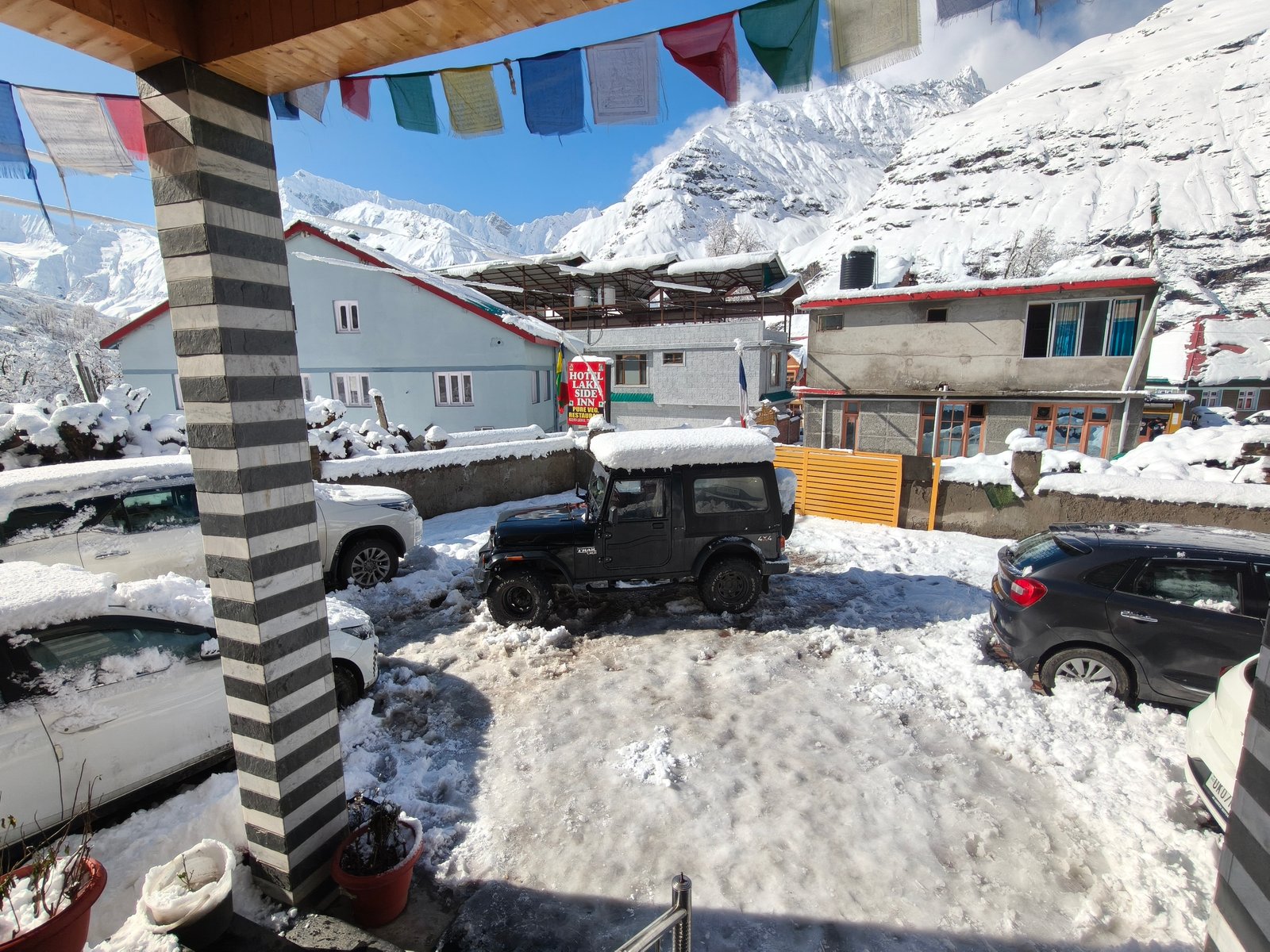
It snows in Sissu mainly from December to February, with the first flurries often arriving in November and leftover snow lingering into March. The heaviest, most reliable snowfall is December and January. Snow here comes in spells driven by western disturbances rather than falling continuously, so timing a trip is about playing the odds — and this guide gives you those odds month by month.
The short answer on Sissu snowfall
Sissu sits on the floor of the Lahaul valley at about 3,100 m (10,170 ft), high enough that once winter sets in, precipitation falls as snow rather than rain. The snow season broadly runs from late November to early March, but it is not evenly spread. Think of it as a bell curve: a light, unreliable start in November, a strong and dependable peak across December and January, a still-snowy but slowly easing February, and a tail of melting, patchy snow through March.
The single most useful thing to understand is that Sissu snow arrives in spells. A western disturbance moves through, drops snow over a day or two, and then clears to bright, cold sunshine for a stretch. So even in peak season you might arrive to fresh powder or to a week-old crust under blue sky — both are “snow in Sissu,” but they look and feel very different. For the full climate picture beyond snow, our Sissu weather month-by-month guide breaks down temperatures too.
Month-by-month chance of snow in Sissu
Here is how we’d rate the likelihood of snow — either fresh falls or lying snow on the ground — through the year, based on living here. Treat it as odds, not a guarantee.
| Month | Chance of snow | What to expect |
|---|---|---|
| November | Low–moderate | First flurries possible; early, patchy, unreliable |
| December | High | Snow builds through the month; white by mid-to-late Dec |
| January | Very high | Peak snow and deepest cold; heaviest falls |
| February | High | Still deeply snowbound; falls begin to ease late month |
| March | Moderate–low | Lingering, melting snow; occasional fresh falls early on |
| April | Low | Snow mostly on higher slopes; valley floor clearing |
| May–October | Very low | Essentially snow-free on the valley floor |
When does the first snow fall?
The first snow of the season usually shows up in November, but it is the least dependable snow of the year. An early-November trip might catch a dusting on the peaks with a bare valley floor, or nothing at all; a late-November week can occasionally deliver a proper white morning if a disturbance times it well. If seeing snow guaranteed matters more than seeing the first snow, November is a gamble.
By early December the odds swing firmly in your favour. Leftover snow from late-November storms often carries over, and fresh falls become steadily more likely, so the valley is usually properly white by the middle of the month. That is why December is the month we most often recommend to first-time snow visitors — strong snow chances with the fewest travel complications.
Best month for snow vs best for playing in it safely
These are two different questions, and conflating them is where people go wrong.
- Best month for maximum snow: January. This is the deep freeze — the heaviest falls, the most snow on the ground, the frozen waterfall at its most dramatic. If raw snow spectacle is the goal, nothing beats January.
- Best month for playing in the snow comfortably and safely: December, or early January. You still get abundant snow, but the cold is a notch more forgiving, daylight is a little longer than the deepest weeks, and — crucially — you avoid the roughly 40-day Lahaul winter-tourism break that typically begins in late January and can restrict visitor movement into February.
So if you want to actually get out, build a snowman and enjoy the valley without wrestling extreme cold or access restrictions, lean toward December. If you want the most intense, photogenic snow and can handle harder conditions, aim for January — but confirm your exact dates with us first, because the break’s timing shifts every year. Our wider Sissu in winter guide covers that whole Dec–Feb experience and the break in detail.
How the tunnel affects winter access
None of this snow would be reachable for ordinary travellers without the Atal Tunnel. It runs under the mountain instead of over the old, snow-choked Rohtang Pass, so the Manali–Sissu road stays open through winter rather than closing for months. In practical terms, that means you can drive up to genuine, deep Himalayan snow in a couple of hours from Manali — something impossible before the tunnel opened in 2020.
The one honest caveat: after a heavy snowfall, the highway and the tunnel portals get cleared, which can cause short, temporary delays or halts until the road reopens. These are usually brief, but they are unpredictable, so never travel on a tight winter schedule. Keep buffer days, drive in daylight, and message us for the live road and snow status before you set off — we live here and will tell you honestly what is on the ground.
Why Sissu snowfall varies so much year to year
If you compare notes with other travellers, you’ll hear wildly different accounts of the same month in different years — and both will be true. Sissu’s snow depends almost entirely on how many western disturbances track across the western Himalaya in a given winter, and how much moisture each carries. A strong season can bury the valley; a weak one can leave it thinly covered even in January.
This is why we never promise a specific snow depth for a specific date, and why we’re wary of any guide that does. The realistic approach is to pick a high-odds month, keep your plans flexible, and check the current conditions with us close to your travel date. That way you go with accurate expectations rather than a brochure fantasy. When you’re ready to lock in dates, our heated mountain-view rooms are a warm, walkable base right by the lake and waterfall.
Frequently Asked Questions
When does it snow in Sissu?
Sissu’s snow season broadly runs from late November to early March. The first light flurries often arrive in November, the heaviest and most reliable snowfall is in December and January, and lingering snow usually lasts into February and early March. Snow falls in spells driven by western disturbances rather than continuously.
Which month has the most snow in Sissu?
January typically has the most snow and the deepest cold — it is the peak of Lahaul’s winter, with the heaviest falls and the frozen waterfall at its most dramatic. December is a close second and is often the better all-round choice because the cold is slightly more forgiving and it falls before the winter-tourism break.
Does it snow in Sissu in November?
Sometimes. November often brings the season’s first flurries, but it is the least reliable snow month — you might find a dusting on the peaks with a bare valley floor, or nothing at all. For a dependably white valley, early December onward is a much safer bet than November.
Is there snow in Sissu in March?
Usually some. March is the melting tail of winter — expect lingering, patchy snow on the ground, especially early in the month, with the occasional fresh fall. By late March the valley floor is clearing, though higher slopes stay white longer. It is a transition month rather than a guaranteed snow month.
Can I reach Sissu when it’s snowing?
Generally yes, because the Atal Tunnel keeps the Manali–Sissu road open through winter, unlike the old Rohtang route. The caveat is that heavy snowfall can trigger short clearing delays or temporary halts at the highway and tunnel portals. Keep buffer days, travel in daylight, and check live status with us before setting off.
Is snowfall in Sissu guaranteed in winter?
No — and be wary of anyone who promises it. Snow depends on how many western disturbances pass through that winter, so amounts swing widely year to year. Pick a high-odds month like December or January, stay flexible, and check current conditions with us close to your date for realistic expectations.
Chasing snow in Sissu?
Tell us your dates and we’ll give you an honest read on snow chances. Warm, heated rooms a 2-minute walk from the lake — book direct.