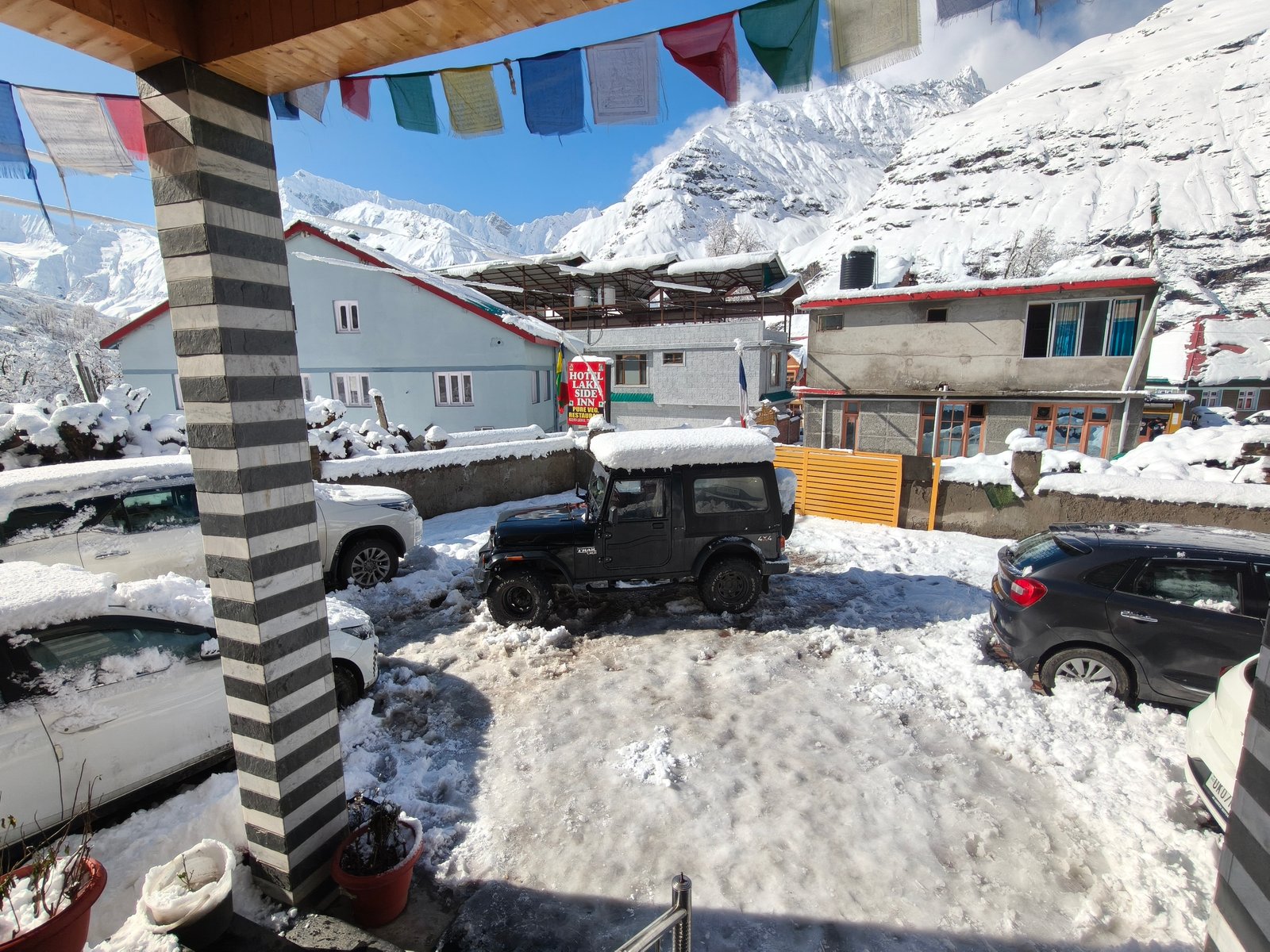
Sissu in winter (December to February) is a full snow-country experience — a white Lahaul valley floor at ~3,100 m, a half-frozen waterfall, and nights that can fall to −10 to −15°C. The Atal Tunnel keeps Sissu reachable when the old Rohtang route is shut, but a roughly 40-day winter-tourism suspension in Lahaul (loosely late-January to end-February) can restrict movement, so always confirm with us before you set a date.
Why come to Sissu in winter at all
For most of the last century, winter simply closed Lahaul. Once the snow settled on Rohtang Pass the valley was cut off for months, and Sissu was somewhere you only saw in summer. The Atal Tunnel changed that completely. Because it burrows under the mountain rather than climbing over it, the Manali side stays connected right through the cold months, and a genuine winter trip to the Lahaul valley floor became possible for ordinary travellers for the first time.
What you get in return is a landscape few people in India ever see: a wide, quiet valley under deep snow, ringed by white peaks, with the sun bouncing hard off the whiteness by day and a still, bitter cold settling in after dark. It is not a manicured hill-station winter — Sissu is small, remote and genuinely cold — and that rawness is exactly the appeal. If a single snowy month is enough for you, our focused Sissu in December guide covers the gentlest window to try it.
Weather across December, January and February
Winter here is not one flat block of cold; each month has its own character, and knowing the difference helps you pick a date.
| Month | What it feels like | Snow & access notes |
|---|---|---|
| December | Cold but often sunny; snow building through the month | Easiest winter month; falls before the main break |
| January | The deep freeze — heaviest snow, hardest cold | Most dramatic scenery; break usually starts late Jan |
| February | Still deeply snowbound; lengthening daylight | Movement often restricted until the break lifts |
Across all three months, the pattern to expect is bright, sharp days when a western disturbance is not passing through, and fast, heavy snowfall when one is. Daytime highs sit somewhere around −2 to 6°C in the sun, and the moment light drops behind the ridge the temperature plunges. Treat every number here as a guide, not a forecast — snow totals and cold snaps swing widely year to year, which is why we always tell guests to message us for the live picture rather than trust an app.
The frozen lake and half-frozen waterfall
Two sights define a Sissu winter. The first is the Sissu Waterfall (Palden Lhamo Dhar), which through December and January stiffens from a flowing cascade into a great hanging column of ice — usually only partly frozen, with water still moving behind the ice, which is what makes it so photogenic. The second is Sissu’s water bodies and the valley floor turning hard and white, so the whole basin reads as one continuous snowfield rather than the green meadow summer visitors know.
Both are a short, flat walk from us — the hotel sits roughly a two-minute walk from the lake and waterfall — which matters a great deal in winter, when you do not want to drive or trek far in the cold to reach the good views. Golden hour on the frozen falls, then straight back to a heated room, is the classic Sissu winter rhythm.
The ~40-day winter-tourism break — read this before booking
Here is the one honest caveat that other pages gloss over. Lahaul usually observes a winter-tourism suspension of roughly 40 days, broadly from around late January to the end of February, tied to the deep snow and the local Halda festival period. During this window, tourist movement in the valley can be officially restricted — not because the tunnel is shut, but because the community and administration pause visitor activity while the valley is at its harshest.
The practical upshot: December and very early January are the reliable winter windows, while late January and February are the ones to confirm. Plan around this and a winter trip is smooth; ignore it and you risk arriving to a valley that is not open for tourism.
Snow play and things to do
Winter days here are short, so the trick is to front-load activity into the bright middle hours and keep evenings cosy. On a good day you can:
- Play in fresh snow on the valley floor — the open, gentle ground around Sissu is far safer for families than steep slopes.
- Photograph the frozen waterfall and white peaks at golden hour, when the low sun sets the ice glowing.
- Take the tunnel drive from Manali into snow — the journey itself is a highlight in winter.
- Slow down deliberately: hot food, chai and a heated room while the light fades early is part of the experience, not a compromise.
Because Sissu is small and quiet in winter, you often get the snowscapes almost to yourself — a very different feeling from the crowded, commercial snow points nearer Manali.
What to pack for a Sissu winter
This is a serious cold-weather trip and packing well is the difference between loving it and enduring it. The essentials:
- Real insulation: a heavy down or insulated jacket, thermals worn as a base layer, fleece mid-layers, a woollen cap, insulated gloves and thick socks.
- Waterproof, gripped boots: ordinary trainers are cold and dangerously slippery on packed snow and ice.
- Sun protection: snow glare at altitude is intense — strong sunscreen and proper sunglasses even on freezing days.
- Power bank and spare batteries: the cold drains phones and cameras alarmingly fast.
- Personal medicines, lip balm and moisturiser, plus any altitude precautions you normally take at ~3,100 m.
For the full season-by-season checklist, use our dedicated what to pack for Sissu guide. Once you are back indoors, our mountain-view rooms come with room heaters, 24×7 hot water and warm bedding, which is what makes deep-winter Sissu comfortable rather than punishing.
Driving and staying safe
Winter driving in Lahaul rewards caution and punishes bravado. A few firm rules:
- Move in daylight only. Ice, short light and fresh snow make after-dark driving genuinely risky — be off the highway before dusk.
- Carry snow chains, or better, hire an experienced local driver. Drivers who know the tunnel route and snow conditions are far safer than self-driving if you are not used to packed snow.
- Keep buffer days. After heavy snowfall the highway and tunnel portals get cleared, which can mean short delays or temporary halts. Never pin a winter Sissu trip to a same-day onward flight or train.
- Respect the altitude and the cold. Take day one gently at ~3,100 m, stay hydrated, keep extremities covered and stay dry — wet clothing in sub-zero cold is a real hazard.
None of this is meant to scare you off; it is simply what a straightforward, safe winter trip looks like when you plan it properly and stay flexible.
Frequently Asked Questions
How cold does Sissu get in winter?
Very cold. Daytime highs across December to February sit around −2 to 6°C in the sun, and nights are reliably below freezing. During cold spells or after fresh snow, nights can drop to roughly −10 to −15°C. These figures vary year to year, so pack for serious cold rather than an average.
Is Sissu open in winter?
Mostly yes, thanks to the Atal Tunnel, which keeps the road open when the old Rohtang route is shut. The exception is a roughly 40-day Lahaul winter-tourism break, broadly late January to end February, when visitor movement can be restricted. Dates shift each year, so confirm your dates with us before booking travel.
When does the waterfall freeze in Sissu?
The Sissu Waterfall (Palden Lhamo Dhar) stiffens into a partly frozen ice column through December and January, usually reaching its most dramatic frozen state in the deep cold of January. It is rarely fully frozen — water often still moves behind the ice — which is exactly what makes it so striking to photograph.
Which winter month is best for Sissu?
December and very early January are the most reliable windows — plenty of snow, deep cold, and dates that fall before the main tourism break. January gives the heaviest snow and hardest freeze but the break usually begins late in the month, and February often stays restricted. If you want snow with the fewest complications, aim for December.
Do I need snow chains or a special car for Sissu in winter?
Strongly recommended. Roads can be icy and snow-packed, so carry snow chains, or better still hire a local driver experienced with the tunnel route rather than self-driving. Drive in daylight only and keep buffer days in case snow-clearing briefly delays the highway after fresh falls.
Is Sissu in winter suitable for families?
Yes, in December and early January, with care. The valley floor is gentle and open, safer for snow play than steep slopes, and warm rooms are a short walk from the lake and waterfall. Take the altitude gently, dress children in proper layers and waterproof boots, and confirm road and tourism status with us before you travel.
Planning a winter escape to Sissu?
Snow, a frozen waterfall and warm heated rooms a 2-minute walk from Sissu Lake. Message us for live snow and road status, then book direct.