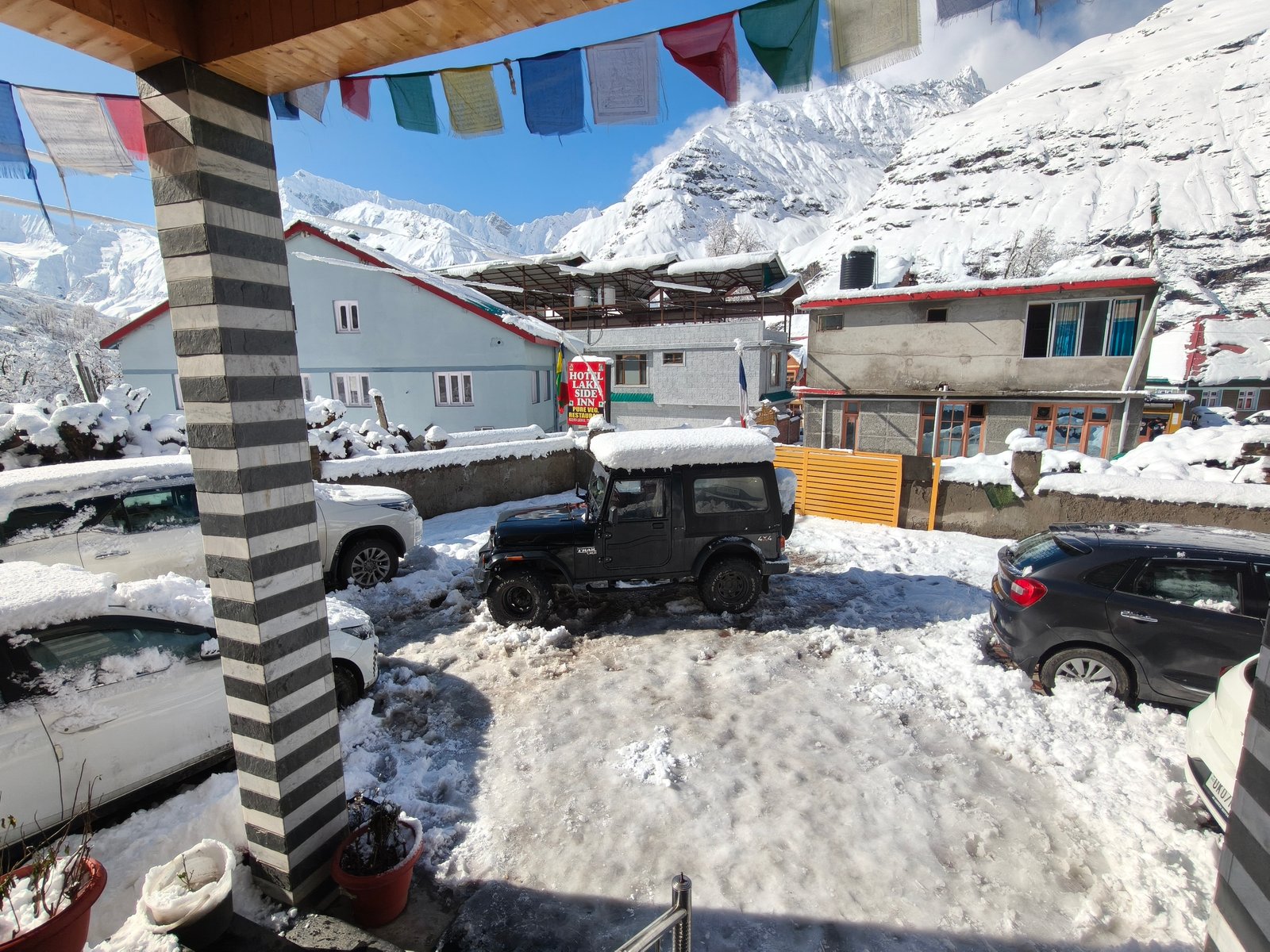
Short answer: Sissu and Spiti are not really an either-or — they combine best. Sissu is a green, low-effort valley base in Lahaul, a short hop from Manali through the Atal Tunnel, ideal for an easy first stop. Spiti is a remote, high-altitude cold desert that needs several days and real acclimatisation. The smart plan is to spend a night or two in Sissu first to adjust to altitude, then push on to Spiti (Kaza) via Kunzum La. If you only want a quick, comfortable mountain break, Sissu alone is plenty; if you want a rugged expedition, Spiti demands more time — and Sissu makes the ideal launchpad. Start by booking Hotel Lake Side Inn for your first nights.
The quick verdict
People often ask “Sissu or Spiti?” as if they were competitors. They are not. Sissu is an easy, green valley stop; Spiti is a demanding high-desert expedition. Sissu sits on the lush Lahaul valley floor, a comfortable hour to ninety minutes from Manali through the Atal Tunnel, with a lake, a waterfall and rooms with heaters and hot water. You can enjoy it with zero mountaineering effort.
Spiti is a different order of trip: a cold, high-altitude desert of stark brown mountains, ancient monasteries and tiny villages, reached by long drives over high passes. It rewards you enormously, but it needs several days, careful acclimatisation and a tolerance for rough roads and remoteness. The best travellers do not choose — they use Sissu as the gentle first rung and Spiti as the big climb.
The core differences
Three things separate these places, and understanding them is the whole planning game:
- Landscape. Sissu is green and alpine — grass, glacial streams, a lake and waterfall. Spiti is a high-altitude cold desert — barren, dramatic, moon-like brown ranges with almost no tree cover.
- Effort and altitude. Sissu is ~3,100 m and easy to reach. Spiti’s hub Kaza is around 3,800 m, and you cross even higher passes to get there, so the air is thinner and the journey far longer and rougher.
- Time and remoteness. Sissu works as a one- or two-night stop. Spiti needs the better part of a week to do properly and safely, with long gaps between fuel, food and help.
None of this makes Spiti “better” or Sissu “lesser” — they are simply different intensities of Himalaya. For a sense of the distances involved from our end of the valley, see distances from Sissu.
Side-by-side comparison
| What matters | Sissu (Lahaul) | Spiti Valley |
|---|---|---|
| Landscape | Green alpine valley | High-altitude cold desert |
| Altitude | ~3,100 m (~10,170 ft) | Kaza ~3,800 m; passes higher |
| Access from Manali | ~38–40 km, ~1–1.5 hrs | ~190–200 km to Kaza, ~6–7 hrs+ |
| Effort | Low — easy comfort stop | High — long, rough, remote |
| Time needed | 1–2 nights | 5–8 days minimum |
| Comfort | Heated rooms, hot water, pure-veg food | Basic guesthouses, homestays |
| Acclimatisation | Gentle first step | Essential — AMS risk is real |
| Best for | Families, couples, short breaks | Road-trippers, adventurers |
Why acclimatisation matters — and how Sissu helps
This is the practical reason to think of the two together. Spiti’s altitude is no joke: Kaza is around 3,800 m, and the passes and side-trips go higher. Jumping straight to that height — especially from the plains — raises the risk of Acute Mountain Sickness (AMS): headaches, nausea, poor sleep and worse. The standard advice is to gain altitude gradually and spend a night at an intermediate height first.
Sissu, at ~3,100 m, is close to a perfect intermediate stop. Spending a night or two here lets your body begin adjusting in relative comfort — a warm, heated room, hot water and easy walks — before you climb into the thinner air of Spiti. It is a genuinely smart, low-cost insurance step, not just a nice add-on. Read our plain-language guide to altitude and AMS in Sissu before you go, and if you are heading deep into the region, our what to pack notes help too.
How to combine Sissu and Spiti
The classic, sensible loop looks like this:
- Manali → Sissu through the Atal Tunnel — an easy first day. Settle in, see the lake and waterfall, and let your body start adjusting to altitude.
- Sissu → Spiti via Kunzum La — the onward road climbs over the high Kunzum Pass into Spiti. This is the big, remote driving day, so start early.
- Explore Spiti over several days — Kaza, the monasteries, high villages and side valleys, at a pace that respects the altitude.
- Return through Lahaul, and a final calm night back in Sissu is a lovely way to decompress before Manali.
Many travellers also fold in Chandratal lake, which lies on the way toward Kunzum La, making Sissu a natural staging point for both Chandratal and Spiti. Just remember the fuel discipline of this region: there is no petrol pump in Sissu, and Tandi (~22 km) is the last pump before a very long stretch — fill up before you commit to the high road. When you are ready to book your acclimatisation nights, message us.
When Sissu alone is enough
Not everyone needs Spiti. If you have only a few days, are travelling with young children or elders, or simply want a restful mountain break rather than an expedition, Sissu on its own is a complete, satisfying trip. You get snow in winter, green meadows in summer, a lake and waterfall within a short walk, heated comfortable rooms and pure-veg food — without the long, punishing drives and altitude strain of Spiti.
Spiti is best saved for when you have the time (at least the better part of a week), the appetite for rough roads and remoteness, and a plan to acclimatise properly. If that is not this trip, there is no shame in enjoying Sissu fully and leaving Spiti for a dedicated future journey. For ideas on filling a Sissu stay, see things to do in Sissu.
Season & road notes
Timing is critical for both. Sissu is reachable most of the year thanks to the Atal Tunnel, with heavy snow roughly December to February and pleasant summers from June to September. The onward road to Spiti via Kunzum La, however, is seasonal and typically only open in the warmer months (broadly June to October); in winter the high pass is snowbound and closed, so a Sissu–Spiti combination is a summer-and-autumn plan, not a winter one.
Also note that in deep winter, Lahaul tourism itself is sometimes suspended for around 40 days (roughly late January to end February) for snow and the Halda festival, with dates varying — so always confirm current road and season conditions with us before finalising a trip in either direction. For general timing, see the best time to visit Sissu.
Frequently Asked Questions
Is Sissu part of Spiti Valley?
No. Sissu is in the Lahaul valley, while Spiti is a separate high-altitude valley reached over the Kunzum Pass. They fall under the same Lahaul & Spiti district of Himachal Pradesh but are very different places — Sissu is green and easy to reach; Spiti is a remote cold desert that needs days and acclimatisation.
Should I visit Sissu or Spiti?
If you have limited time or want an easy, comfortable break, choose Sissu. If you want a rugged high-altitude road trip and have the better part of a week, do Spiti — but stop in Sissu first to acclimatise. The two combine better than they compete, with Sissu as the gentle first step before Spiti’s thin air.
How do you get from Sissu to Spiti?
You drive on from Sissu through Lahaul and over the high Kunzum La (Kunzum Pass) into Spiti, heading toward Kaza (~190–200 km, a long day). This route is seasonal, usually open only in the warmer months, roughly June to October; the pass is snowbound and closed in winter. Fuel up first, as there is no petrol pump in Sissu.
Does staying in Sissu help with Spiti altitude sickness?
Yes, it can help. Sissu sits at about 3,100 m, making it a useful intermediate stop before Spiti’s higher elevations (Kaza ~3,800 m). Spending a night or two here lets your body begin adjusting gradually, lowering AMS risk. See our altitude and AMS guide for practical advice.
How many days do you need for Sissu and Spiti together?
Plan at least a week. Spiti alone needs roughly 5–8 days to do safely, plus 1–2 nights in Sissu at the start to acclimatise and a possible night on the way back. A rushed Spiti trip is uncomfortable and risky at altitude, so give it time rather than trying to squeeze it into a long weekend.
Can I visit Spiti from Sissu in winter?
Generally no. The Sissu–Spiti route over Kunzum La is closed in winter when the pass is snowbound, so the combination is a summer-and-autumn plan (broadly June to October). Sissu itself stays reachable most of the year via the Atal Tunnel, but always confirm current conditions with us before travelling.
Acclimatise in comfort before Spiti
Make Sissu your first stop — a heated mountain-view room, hot water and pure-veg food at ~3,100 m before you climb into Spiti. Book direct.