For decades, the only way to drive from Manali into the Lahaul valley — where our village, Sissu, sits — was over the Rohtang Pass, a roughly 3,980 m crossing that snowed shut for half the year. Since the Atal Tunnel opened in October 2020, that 9.02 km tube under the mountain has become the main route: it bypasses Rohtang entirely, cuts the Manali–Sissu drive to about 38–40 km and roughly an hour, and keeps Lahaul reachable for most of the year. Here is exactly what changed, and what it means for planning your trip.
The old way: over the Rohtang Pass
Before 2020, every car, bus and truck heading from Manali into Lahaul & Spiti had to climb the Rohtang Pass. The pass sits at around 3,980 metres on the old Manali–Lahaul road, roughly 51 km from Manali, and you reached it by grinding up a long series of switchbacks from the Manali and Gulaba side. On a good summer day it was one of the great Himalayan drives. On a bad day — and there were many — it was hours of crawling traffic, mud, fog and altitude.
The bigger problem was the calendar. Rohtang is a true high pass: heavy snow typically closes it through the winter, and for years that effectively cut Lahaul off from Manali for months at a time. When the pass was shut, villages like ours could only be reached by the long way round, or not by road at all. Even in season, the route was permit-controlled, with daily vehicle caps and rules that the authorities revise from time to time. Reaching Sissu used to mean budgeting most of a day, hoping the weather held, and accepting that the road might simply be closed.
None of that history has disappeared — the Rohtang road is still there, and on clear summer days it is still a spectacular drive. What changed is that it is no longer the only way in.
What the Atal Tunnel changed
The Atal Tunnel opened in October 2020 and runs 9.02 km straight through the Pir Panjal range. Its south portal is near Dhundi on the Manali side; its north portal comes out on the Lahaul side near Teling, already deep in the valley. Instead of climbing nearly 4,000 m over a pass, you now drive level and dry through the mountain at a steady 60 km/h speed limit. The tunnel is toll-free, and there are firm safety rules inside — no stopping and no photography — which keep traffic moving.
The single most important effect is access. Because the tunnel passes under the snowline rather than over it, Lahaul is now reachable by road for most of the year, including much of the winter when Rohtang itself is buried. For a village like Sissu, sitting on the valley floor just about 12 km from the north portal, that turned a seasonal, weather-dependent destination into something close to a year-round one. We go into the in-tunnel rules, timings and what to expect at the portals in our companion guide to Atal Tunnel timings and rules.
Side-by-side: tunnel vs pass
Here is the clearest way to see the difference between the two routes into Lahaul. Both still exist; the tunnel is simply the faster, more reliable default.
| Atal Tunnel | Rohtang Pass | |
|---|---|---|
| Type | 9.02 km road tunnel under the range | High mountain pass at ~3,980 m |
| Opened / age | October 2020 | The historic Manali–Lahaul crossing |
| From Manali | Portal reached from the Manali side; ~38–40 km on to Sissu | Pass is ~51 km from Manali via the old road |
| Drive feel | Level, dry, ~1–1.5 hrs Manali–Sissu | Long switchback climb, weather-dependent |
| Season | Keeps Lahaul open most of the year | Seasonal; typically closed in winter |
| Permit | No special permit to pass through | Permit-controlled — verify current rules |
| Speed / rules | 60 km/h; no stopping or photography inside | Open road; conditions vary by day |
| Scenery | Quick, but you skip the high views | Big-pass panoramas on a clear day |
Distance, drive time & the numbers
The headline change is how much shorter and more predictable the drive became. Going over Rohtang, the pass alone is about 51 km from Manali, and that is before you descend the far side and continue along the valley to Sissu — in practice a half-day journey when the road and weather cooperated. Through the tunnel, Manali to Sissu is now only about 38–40 km and roughly 1 to 1.5 hours of driving. From the north portal it is just about 12 km on to our village.
- Manali → Sissu (via tunnel): ~38–40 km, about 1–1.5 hrs in normal conditions.
- North portal → Sissu: ~12 km, a short and easy stretch along the valley floor.
- Rohtang Pass: ~3,980 m and ~51 km from Manali on the old road — a far longer, slower crossing.
Those are driving distances in fair conditions; mountain weather, traffic at the portal and the season can all stretch the clock. For a full breakdown of how far Sissu is from Manali, the tunnel and other valley landmarks, see our distances from Sissu guide, and our step-by-step how to reach Sissu page.
Season & year-round access
This is the change that matters most for travellers. The old reality was simple and harsh: when Rohtang closed for winter, road access to Lahaul largely closed with it. Trips to Sissu were effectively a summer-and-autumn affair, planned around the pass being open.
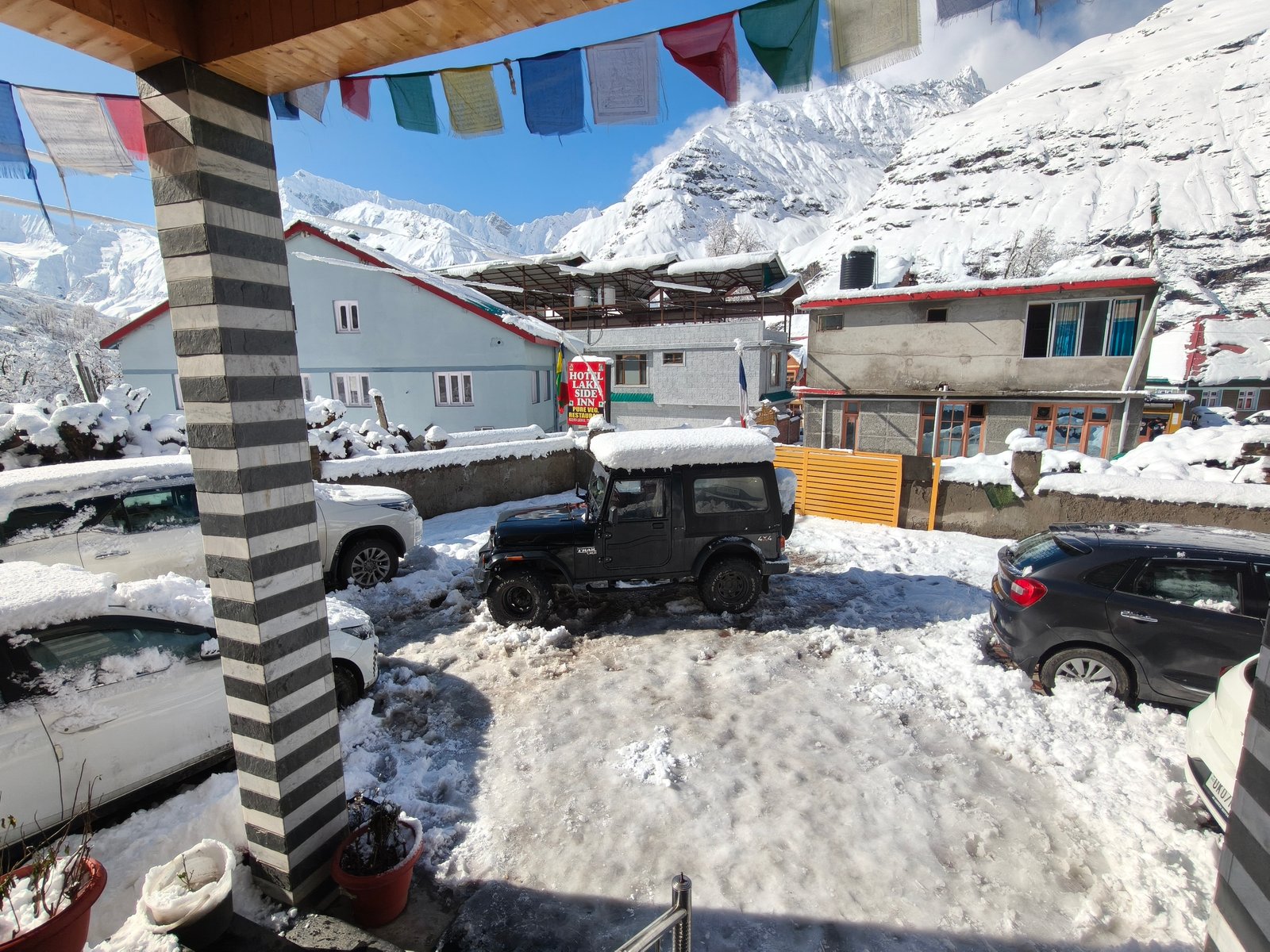
The tunnel rewrote that. By going under the range instead of over it, it keeps the Lahaul valley reachable for most of the year, including a good part of the winter. That is why Sissu has become a genuine snow destination — you can now drive in to see the valley under fresh snow during months that were once off-limits. It does not make the route invincible: in heavy snowfall or for maintenance, authorities can still restrict or briefly close the tunnel, and approach roads can be slow. But compared with the all-or-nothing Rohtang season, the difference is night and day. If you are planning a winter visit, message us first on our contact page and we will tell you the current ground conditions.
Permits: what each route needs
One of the practical wins of the tunnel is that there is no special permit simply to drive through it to reach Lahaul and Sissu — you just follow the in-tunnel rules and keep moving. The Rohtang Pass, by contrast, has long been permit-controlled, with daily caps and a booking system designed to protect the fragile high-pass environment.
Because those Rohtang rules — permit quotas, fees, opening dates and rest-day closures — are revised from year to year by the authorities, we deliberately won't quote specific numbers here that might be out of date by the time you read this. If your plan includes going up to the Rohtang top itself (for the views, not to reach Lahaul), verify the current permit and closure rules close to your travel date through official Himachal sources. For simply getting to Sissu, you don't need any of that — the tunnel route handles it.
- Just reaching Sissu / Lahaul: take the tunnel — no special permit, follow the posted rules.
- Visiting the Rohtang top as a sightseeing trip: expect a permit and seasonal restrictions — verify current rules before you go.
Scenery & experience — what you trade
Honesty matters here, because the tunnel is not better at everything. What you gain in speed and reliability, you give up in high-altitude drama. The Rohtang crossing, on a clear day, is one of the classic Himalayan road experiences: you climb through changing landscapes, top out at nearly 4,000 m, and look out over a sweep of peaks and the upper valleys. People came partly for that drive itself.
The tunnel is the opposite kind of experience — nine kilometres of efficient, well-lit road where you can't even stop for a photo. You trade the big-pass views for a fast, weather-proof passage. The good news is that the scenery isn't gone; it has just moved. Once you emerge on the Lahaul side, the valley opens up around you, and a short drive later you are at Sissu with its lake, waterfall and ring of snow peaks. Many travellers now do the smart thing: take the tunnel in for a quick, reliable arrival, and — only if Rohtang is open and permits allow — treat the old pass as an optional sightseeing add-on rather than a necessary crossing. To see what waits at the other end, have a look at our Sissu Lake guide.
What it means for your trip today
Put simply: planning a Lahaul trip is far easier now than it was a few years ago. You no longer have to organise everything around whether a high pass is open, and you no longer lose half a day to the crossing. For most visitors the route is now “drive from Manali through the Atal Tunnel and arrive in Sissu in about an hour or so.”
- Default to the tunnel. It is faster, dry, toll-free and open across most of the year. Treat Rohtang as scenery, not necessity.
- Time your tunnel run. The portal can get busy at peak hours; our timings and rules guide helps you avoid the queue.
- Winter is now on the table. Snow trips to Sissu are realistic — just check conditions with us before you set off.
- Stay on the valley floor. Basing yourself in Sissu, rather than day-tripping from Manali, lets you enjoy the valley without re-driving the route. We sit a 2-minute walk from Sissu Lake and the waterfall — see our hotels near the Atal Tunnel page and our guide to staying at a hotel near Rohtang Pass.
The short version of the whole story: the Atal Tunnel didn't just shorten the road to Lahaul — it changed when and how reliably you can come at all. The Rohtang Pass remains a beautiful piece of the journey for those who want it, but it is now a choice, not a checkpoint.
Frequently Asked Questions
Has the Atal Tunnel replaced the Rohtang Pass?
For reaching Lahaul and Sissu, yes — the tunnel is now the main route and bypasses the pass entirely. The Rohtang Pass road still exists and reopens seasonally, but you no longer need to cross it to get into the valley.
How long is the Atal Tunnel and when did it open?
The Atal Tunnel is 9.02 km long and opened in October 2020. It runs under the Pir Panjal range from a south portal near Dhundi on the Manali side to a north portal near Teling on the Lahaul side.
How much faster is the tunnel than going over Rohtang?
A lot. Manali to Sissu via the tunnel is about 38–40 km and roughly 1 to 1.5 hours. The Rohtang Pass alone is about 51 km from Manali and sits at ~3,980 m, making the old crossing a much longer, slower drive.
Do I need a permit to drive through the Atal Tunnel to Sissu?
No special permit is required just to pass through the tunnel to reach Lahaul and Sissu. You simply follow the in-tunnel rules — a 60 km/h limit and no stopping or photography. The pass route is permit-controlled; verify current Rohtang rules separately if you plan to go up there.
Is the route to Sissu open in winter now?
Because the tunnel passes under the snowline, Lahaul stays reachable for most of the year, including much of winter, which made Sissu a year-round snow destination. Heavy snowfall or maintenance can still cause restrictions, so always check current conditions before a winter trip.
Is the Rohtang Pass still worth driving?
On a clear day, yes — the high-pass views are spectacular and it is a classic Himalayan drive. But it is now best treated as an optional sightseeing detour rather than the way in, and it is seasonal and permit-controlled, so verify the current rules and opening dates first.
How far is Sissu from the Atal Tunnel north portal?
About 12 km. Once you exit the north portal on the Lahaul side, it is a short, easy drive along the valley floor to Sissu, where our hotel sits a 2-minute walk from the lake and waterfall.
Which route should I plan around — tunnel or pass?
Plan around the tunnel. It is faster, dry, toll-free and open across most of the year, so it is the reliable default for arriving in Sissu. Keep Rohtang in mind only as a scenic add-on if it is open and permits allow during your stay.
Stay in the valley, not on the road
Skip the back-and-forth from Manali. Base yourself in Sissu — mountain-view rooms a 2-minute walk from the lake and waterfall, just minutes from the Atal Tunnel.