Gondhla Fort, also called Gondhla Castle or Gondhla Killa, is a tall timber-and-stone tower in Gondhla village, the historic seat of the Thakurs of Lahaul. Often described as eight storeys high, it is a quiet, offbeat heritage stop roughly 14–18 km from Sissu, an easy short drive on the road towards Keylong.
About Gondhla Fort
Gondhla Fort stands in the village of Gondhla in the Lahaul valley of Himachal Pradesh, on the route between Sissu and Keylong. Locally it is known as Gondhla Castle or Gondhla Killa, and it is frequently singled out as one of the very few surviving fort-towers of its kind in the Lahaul region. Unlike a sprawling rampart-and-bastion fortress, this is a tall, slender tower — built upward rather than outward — that rises above the village and the surrounding fields and orchards.
The fort was the residence of the Thakurs of Gondhla, the local ruling family who, for generations, held sway over this stretch of the valley. That history gives the building a real sense of place: it is not a reconstructed monument but a weathered, lived-in piece of Lahauli heritage that has stood through centuries of harsh mountain winters. For travellers basing themselves in Sissu, it makes a rewarding, low-key half-day outing — one of the quieter things to do in Sissu for anyone who enjoys history over crowds.
History & architecture
The fort is generally dated to around the early 18th century — roughly 1700 AD in many accounts — and its construction is commonly attributed to Raja Man Singh of Kullu, whose ties with the local Thakurs linked the two ruling lines. As with much of Lahaul's oral history, the exact dates and details vary between sources, so it is best to treat the timeline as approximate rather than precise; what is consistent across accounts is that the tower is several hundred years old and closely bound up with the Thakur family of Gondhla.
Architecturally, the fort is a fine example of the traditional Himalayan kath-kuni (or kathkuni) style, in which courses of dressed stone alternate with thick wooden beams. This timber-and-stone layering is not just decorative — the interlocking wood gives the structure a degree of flexibility that helps it absorb the earth tremors common to this seismically active belt, which is one reason such towers have survived so long. Rising through several storeys (most descriptions put it at around eight, though some say seven), the tower would once have combined defence, storage and living quarters in a single vertical structure typical of the region's old strongholds. For a sense of how Gondhla fits into the wider valley, our guide on Sissu vs Keylong vs Jispa sets out the main stops along this route.
What to see inside
The real draw of Gondhla Fort is its atmosphere and the heirlooms associated with the Thakur family. Over the years the fort has reportedly housed a collection of old relics — weapons, idols, religious objects and family heirlooms passed down through generations — that speak to the history of the ruling line and to Lahaul's blend of Buddhist and local traditions. Standout points of interest include:
- The tower itself — the layered timber-and-stone construction is best appreciated up close, where you can see how the beams and stonework interlock.
- Old relics and weapons — arms and everyday objects connected with the Thakurs, reflecting the fort's role as a seat of local power.
- Idols and religious heirlooms — items tied to the family's faith and to the wider devotional life of the valley.
- The setting — the views of Gondhla village, its fields and the surrounding peaks from the fort's vantage point are a reward in themselves.
Because this is a privately connected heritage site rather than a fully staffed museum, what you can actually see inside on any given day can vary. If viewing the interior and the relics matters to you, it is worth asking locally in advance.
How to reach from Sissu
Gondhla lies on the main Lahaul road between Sissu and Keylong, so reaching it is simple if you have transport:
- From Sissu — Gondhla is roughly 14–18 km away, a short drive heading towards Keylong. By car or taxi it is a comfortable outing of well under an hour each way.
- By road from Manali — Sissu itself is about 40 km from Manali via the Atal Tunnel; see our how to reach Sissu guide for timings and road notes, then continue along the valley towards Gondhla.
- Local buses and shared taxis — the Manali–Keylong road carries some public and shared transport, but services are limited and timings change with the season, so a private vehicle is the most reliable way to fit Gondhla into a day.
From the road, the village and the tower are easy to spot; the fort sits a short way off the highway within Gondhla itself.
Best time & tips
The most comfortable window to visit is late May to early October, when the Atal Tunnel route is reliably open, the valley is green and the weather is mild. Outside this window, heavy snow can make the road and the village harder to reach, so winter trips need careful planning. A few practical tips:
- Carry water, sunscreen and a layer or two — even in summer the mountain air is cool and the sun is strong at this altitude.
- Wear sturdy shoes; the ground around old village structures can be uneven.
- Be respectful — this is a heritage site tied to a local family and community, not a commercial attraction.
- Allow flexibility in your plans in case access to the interior is limited on the day.
Note: opening hours and access to the inside of Gondhla Fort are not fixed or guaranteed, and can depend on whether a caretaker or family member is present. Please check locally — or ask us at the hotel — about current access before you set out, so you are not disappointed on arrival.
Where to stay
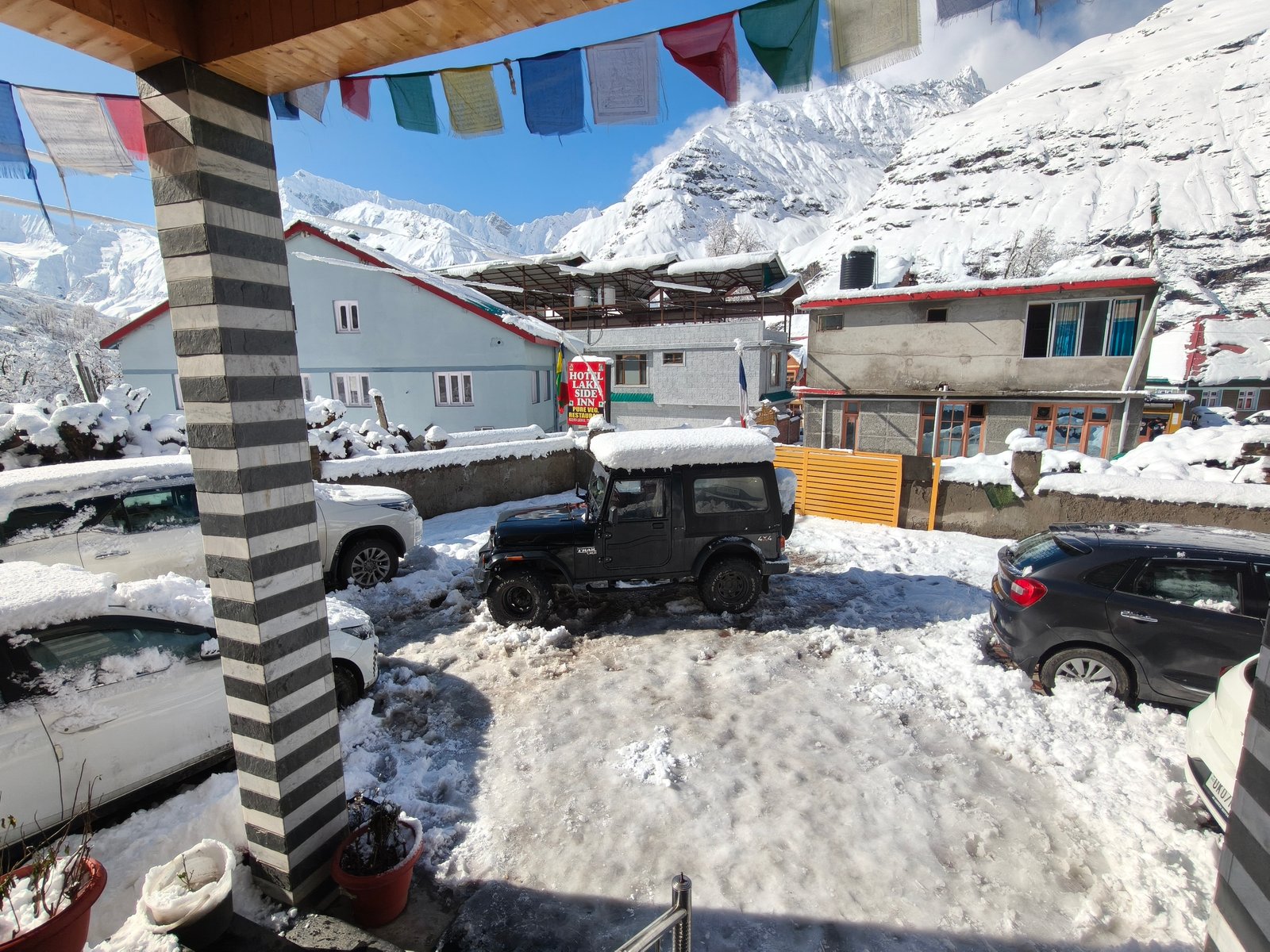
The easiest way to explore Gondhla and the rest of the valley is to base yourself in Sissu and treat the fort as a relaxed day trip. Hotel Lake Side Inn sits right in Sissu, close to the lake and waterfall, which keeps Gondhla, Keylong and the valley's other sights all within easy reach.
What's included with a stay:
- Mountain-view rooms looking out over the Sissu valley and the snow peaks.
- Hot water — essential at this altitude, morning and night.
- Pure-veg restaurant serving fresh, home-style meals on site.
- Free parking for guests arriving by car or taxi.
Browse our rooms and rates to find the right fit, or contact us directly for dates and availability. Booking direct with us gets you the best rate and a host on hand for directions, current road conditions and tips on visiting Gondhla.
Frequently Asked Questions
What is Gondhla Fort?
Gondhla Fort, also called Gondhla Castle or Gondhla Killa, is a historic multi-storey timber-and-stone tower in Gondhla village, Lahaul. It was the former seat of the Thakurs (local rulers) of Gondhla and is one of the few surviving fort-towers in the region.
How old is Gondhla Fort?
It is several hundred years old, generally dated to around the early 18th century (roughly 1700 AD) and commonly attributed to Raja Man Singh of Kullu. Exact dates vary between sources, so the timeline is best treated as approximate.
How far is Gondhla Fort from Sissu?
Gondhla is roughly 14–18 km from Sissu, on the main Lahaul road towards Keylong — a short drive of well under an hour by car or taxi.
Can you go inside Gondhla Fort?
Sometimes, but access to the interior is not fixed or guaranteed and can depend on whether a caretaker or family member is present. It is best to check locally in advance about current opening and access.
Is Gondhla Fort worth visiting?
For travellers who enjoy history and quieter, offbeat sights, yes. It is a genuine piece of Lahauli heritage with distinctive kath-kuni architecture and a peaceful village setting — a rewarding half-day trip from Sissu rather than a busy tourist stop.
How do you reach Gondhla Fort?
Reach Sissu (about 40 km from Manali via the Atal Tunnel), then continue along the valley road towards Keylong for roughly 14–18 km to Gondhla village. A private car or taxi is the most reliable option; see our how to reach Sissu guide for road notes.
A heritage day trip from Sissu
Base yourself in Sissu — lake, waterfall and offbeat forts within easy reach. Mountain-view rooms and pure-veg meals at Hotel Lake Side Inn. Book direct.